BAH/NVIDIA Team
The Data Science Bowl is about learning as much as it is about competing. We’ve provided participants with access to a variety of learning resources to help you get started, including comprehensive tutorials and access to NVIDIA’s Deep Learning training. Master-level data scientists from Booz Allen and our partners will bring you tips and tricks on a variety of data science topics in our weekly blog posts.
This year we decided to add even more resources. A team of data scientists from Booz Allen and NVIDIA will be taking part in the competition. Regular progress updates will give you an opportunity to follow their competition experience. None of the team members had knowledge of the problem or data beforehand, so their experience will match that of the other competitors. Although they aren’t eligible to win any of the prizes, there is a lot that can be learned from going on this journey with them.
Would you like to share your team’s story? Contact us and we might feature you on the website.

Jared Sylvester
Booz Allen Hamilton
read bio
Jared Sylvester is a consultant/machine learning researcher/data scientist at Booz Allen Hamilton. In 2014, he received his doctorate in Computer Science from the University of Maryland, focusing on the field of biologically-inspired AI. His dissertation topic was executive function and cognitive control (working memory, decision making, etc.) using neural-inspired systems rather than rule-based ones—essentially trying to get computers to act in ways that are a little more like our brains and also get artificial neural networks to act a little more like traditional computers. While at the University of Maryland, Jared also worked at the Center for Complexity in Business, applying data-driven computational techniques to marketing, finance, and other business domains. He has also done research in fields including data mining, biometrics, circuit design, cognitive psychology, finance, social networks, and marketing.
Samantha Tracht
Booz Allen Hamilton
read bio
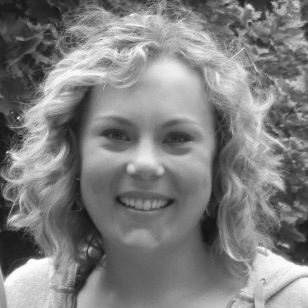
Samantha Tracht joined Booz Allen Hamilton in March 2015 as a Lead Data Scientist. Since then she has been working on helping government clients migrate legacy and current data into a data lake based in Hadoop and most recently she has been creating models and analyzing data to determine online authentication fraud. Prior to joining Booz Allen she worked with the Watson Implementations Group at IBM creating prognostic models and performing analytics for healthcare clients and cancer research centers. Samantha is particularly interested in healthcare and national security applications of machine learning. She received her masters degree in mathematics from the University of Tennessee in 2013, where she focused on infectious disease modeling. This is her first Kaggle competition.

Peter VanMaasdam
Booz Allen Hamilton
read bio
Peter VanMaasdam has been performing research, development, and implementation of Computer Vision and Machine Learning technologies for the past 18 years, and has been with Booz Allen Hamilton since July 2015. Prior to Booz Allen, he was employed with Northrop Grumman Electronic Systems and Raytheon (Hughes) Missile Systems, where he worked on a variety of advanced programs in both internal research and client funded efforts, including such technologies as Full Motion Video and Wide Area Motion Imaging exploitation, 3D Laser Radar exploitation, Infrared (Midwave and Longwave) and Synthetic Aperture Radar Automated Target Recognition, and several missile defense tracking and discrimination programs. These efforts included initial algorithm design, implementation in embedded systems, and field testing. He has a Bachelor’s Degree in Aerospace Engineering from Purdue University, a Master’s Degree in Electrical Engineering from the University of Southern California, and a Post Master’s Certificate from Johns Hopkins University. View his Kaggle profile.
Jon Barker
NVIDIA
read bio
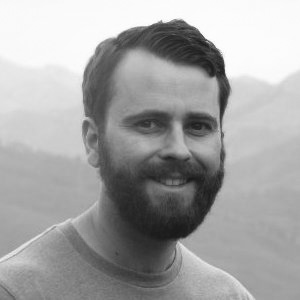
Jon Barker joined NVIDIA in May 2015 as a Solution Architect. Since then he has been helping customers to design, implement and optimize a variety of GPU accelerated deep learning applications and has also provided internal and external deep learning training. Jon is particularly focused on the application of deep learning to problems in defense and national security. Jon graduated from the University of Southampton in the UK in 2007 with a PhD in Mathematics. Prior to joining NVIDIA, Jon worked for the UK Ministry of Defence and spent four years on secondment to the US Department of Defense where he was a research scientist focused on data analytics and machine learning for multi-sensor data streams. In order to learn new data science skills Jon has been a long time competitor on Kaggle. View his Kaggle profile.
Maxim Milakov
NVIDIA
read bio
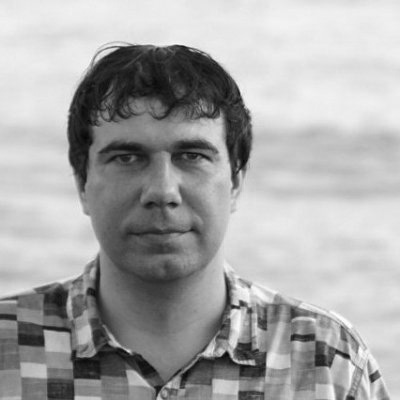
Maxim Milakov joined NVIDIA in January 2012. Since then he has been working on accelerating scientific and industrial applications on GPUs in various fields including machine learning, developing codes and algorithms to maximize performance while also collaborating with internal teams to help co-design future hardware and tools. Maxim graduated from Moscow State University’s Computer Science department in 1998. Before joining NVIDIA, Maxim worked for CBS Interactive as a software architect in the R&D department. With a passion for deep learning in general and convolutional neural networks in particular, Maxim practices his skills at Kaggle, placing well in a number of competitions. View his Kaggle profile.
BAH/NVIDIA Insights
This year is the first time that Booz Allen and NVIDIA have partnered to enter a team into the Data Science Bowl. Our goal for this combined team was to share some of our successes and challenges along the way, as well as to provide insight into how to approach this type of competition. We’ve been able to post updates about our progress, respond to questions on the Kaggle forums, and help other teams find new ways of looking at the problem. Of course, we’re also hoping that by combining our talent and resources we will be able to come up with a top solution – even if we’re not eligible for the prize money. Read More


