Booz Allen Hamilton’s first annual Data Science Bowl attracted more than a thousand teams worldwide to compete in developing the best computer-based visual recognition system. The competition was hosted on a Kaggle platform for the duration of three months. Read More
For us, data science is more than a skill or profession. It is a calling and a way of life. We have a personal passion for trying to solve the previously impossible. We want to share our passion with you. Each week we will share ideas, connect you with the latest topics and trends, and help you start your journey towards a career in data science.
Meet some of our data science team.
Lauren Neal
Life Science Capability Lead
read bio
Lauren has more than 14 years of experience in the life sciences industry with a focus on creating and delivering innovative solutions for the acquisition, processing, computation, storage and visualization of complex scientific data. Lauren leads a range of investment and client engagements involving big data analytics, including pharmaceutical adverse event signal detection, population health surveillance, and cloud-based bioinformatics pipeline development for precision medicine. Through the integration of disparate data sources and application of machine learning and predictive analytics, Lauren helps federal agencies including the U.S. Food and Drug Administration (FDA) and the National Institutes of Health (NIH), as well as commercial pharmaceutical companies, to implement data-driven approaches for medical product development. Prior to joining Booz Allen, Lauren was a fellow at the FDA Center for Dug Evaluation and Research (CDER) where she developed quantitative methods for optimized dose selection to aid in the review and approval of new drug submissions. Lauren is also the founder of the Booz Allen Women in Data Science group and sponsors data science for social good projects.
Charles Glover, II
Data Scientist
read bio
Charles specializes in algorithm analysis and machine learning. He helps clients discover insights from large data sets and shift from traditional infrastructures to cloud computing environments. He is the founder of the website LEARNINGlover.com, which provides resources for learning math and computer-related concepts. He received his BS from Morehouse College and his MS and PhD from the University of Maryland. His work was covered in the July 2014 issue of Ebony magazine where Data Science was noted as the most growing job in the country.
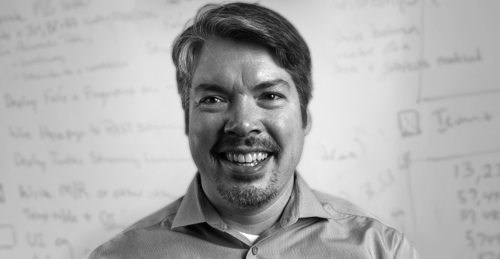
Drew Farris
Data Scientist & Software Developer
read bio
Drew helps his clients solve problems related to large-scale analytics, distributed computing and machine learning. He is a contributing author to Manning Publications Taming Text and the Booz Allen Hamilton Field Guide to Data Science. He has implemented a wide variety of text exploration, management and retrieval applications combining natural language processing, classification and visualization techniques. He is a member of the Apache Software Foundation and contributes to a number of open source projects including Accumulo, Mahout, Lucene and Solr. He holds a master’s degree in Information Resource Management from Syracuse University’s iSchool and a B.F.A in Computer Graphics.
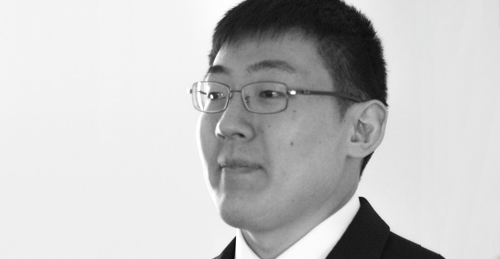
Michael Kim
Data Scientist
read bio
Michael has provided technical consulting for major government agencies and commercial Fortune 500 firms. He has deep expertise in machine learning, distributed computing, data mining, and quantum computing. He has authored solo publications for IEEE and ASE conferences. He has created commercially-available mobile apps and shares extensively on MathLab Central. He is recognized as a Kaggle Master-tier data scientist, ranked within the top 50 data scientists internationally and the top 12 within the U.S.
Stephanie Rivera
Data Scientist
read bio
Stephanie has helped clients in Financial Services, Energy, and Defense realize value from their data. She has deep expertise in graph theory, machine learning, computer engineering, and distributed computing. She works extensively with Apache Spark. She is published is multiple peer-reviewed journals, is a contributing author on the Booz Allen Hamilton Field Guide to Data Science, and helped created Booz Allen’s Explore Data Science training. She is sought after as a presenter at professional conferences and meetup groups and has taught university-level mathematics. She holds a B.S. and M.S. in mathematics.
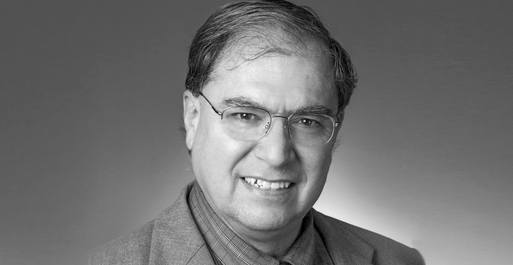
Kirk Borne
Principal Data Scientist
read bio
Kirk is the Principal Data Scientist within the Strategic Innovation Group at Booz Allen Hamilton. He previously spent 12 years as Professor at George Mason University in the Computational and Data Sciences program. Before that, he worked 18 years on various NASA contracts, as research scientist and manager on large data systems. He has a PhD in Astrophysics from Caltech. He has applied his expertise in science and data systems as a consultant and advisor to numerous agencies and firms, focusing on the use of data for discovery, decision support, and innovation across many different domains and industries. He is an active contributor of data science and analytics information on social media, where he has been named consistently among the top worldwide influencers in big data and data science. Read his blog at http://rocketdatascience.org/
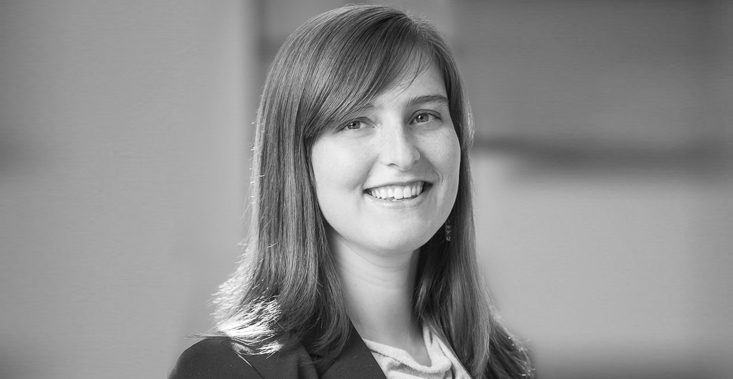
Shannon Lantzy
Researcher
read bio
Shannon works in the healthcare and health policy domains, primarily focusing on causal analytics and information systems. Her projects have focused on patient decision-making, physician quality, consumer information processing, and the economics of regulation. She is a multi-method researcher with expertise in running human subjects experiments, econometrics, and machine learning. She holds a B.S. in Mathematics, Masters of Information Management, and is currently working toward her Ph.D. in Consumer Research and Information Systems.
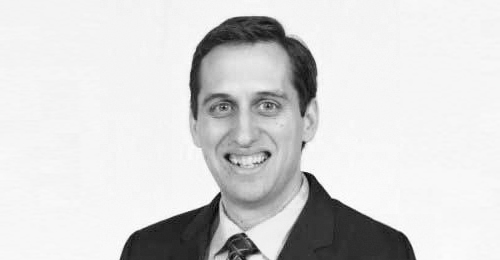
Aaron Sander
Lead Data Scientist
read bio
Aaron focuses on deep learning, machine learning, and algorithm development. He has worked on solutions in a variety of domains, including pharmaceutical business analytics, image analysis for computed tomography, Next Generation Sequencing based forensic bioinformatics, cybersecurity strategy, and cloud based applications of deep learning. Aaron has led projects across multiple sectors including pharmaceutical, nonprofit, and government. He has authored numerous publications in physics and astrophysics journals and holds a patent in the area of forensic bioinformatics. He holds a Ph.D. in Physics from Ohio State University where he developed an analysis to search for dark matter in the Milky Way with the Fermi Space Telescope.
Marck Vaisman
Data Scientist
read bio
Marck designs data-driven solutions to help clients make better business decisions, recognize opportunities, experiment, gain insights, and solve difficult problems using large datasets and a combination of tools. His experience pulls from multiple disciplines including Internet, telecommunications, and high tech. Marck is an experienced R programmer and advocate, and a contributing author to The Bad Data Handbook and Analyzing the Analyzers. He teaches graduate level classes at George Washington University and George Mason University. Marck founded Data Community DC, an organization that promotes Data Science and Analytics practitioners in the Washington DC Metro area. He holds a B.S. in Mechanical Engineering from Boston University and an MBA from Vanderbilt University.
Phi (Vu) Tran
Lead Data Scientist
read bio
Vu is always thinking about the future. His work in predictive analytics helps to forecast unknown events. He likes to take on projects that have applications across multiple domains including energy, health care, and national security. His other professional and research interests include machine learning, deep learning, natural language processing and understanding, and computer vision. Vu enjoys general aviation, outdoor pursuits and foodie adventures. He holds a B.S. in Bioengineering and a Masters in Engineering Physics from the University of California, San Diego.
With the next Data Science Bowl just around the corner, I set out to prepare myself for the competition. The truth: I’m not a coder.
I have an interest in data science. I appreciate the process—and the results. I’m open to advice from the best of the best. With that in mind, I set out to find the top tips and tricks buried within last year’s competition forums. What I found is a treasure trove for anyone who is going to participate, from beginner to seasoned pro. Read More
Most of us love a good chocolate brownie. The existence of chocolate is not the only reason. We also love a good brownie because of its texture, convenient serving size, the presence of nuts (or other confections), and its “just right” density (otherwise, it may be too fluffy like a chocolate cake; or it may be too heavy like a dense fudge). We therefore love the chocolate brownie because it has several delightful, distinguishing, and delicious features. Read More
One of the questions I often get from people after giving a talk is “How do I get started with deep neural nets?” Building new deep neural nets is a three-part process: learn the theoretical concepts of the model, play with toy models, and put it into practice by building your own models.
Read More
Data science is often regarded as an elite field. It draws experts with advanced degrees in math and science, fluency in multiple programming languages, and a firm grasp of statistics and probability theory. To reach the top of a Kaggle challenge like the Data Science Bowl is to demonstrate a feat of technical wizardry.
At the same time, there is a movement within both corporate and academic spaces to bring data science capabilities to the masses. Tools are now available that lower the barrier to entry for business users. An upcoming product from Booz Allen Hamilton will allow anyone to ask questions of Big Data sources in real-time using human-readable language. The traditional analytics workflow is being automated and crowd-sourced, and the programmers and analysts displaced as gatekeepers of information.


